
Gold Price Prediction 2026: Will Gold Go Up or Down?

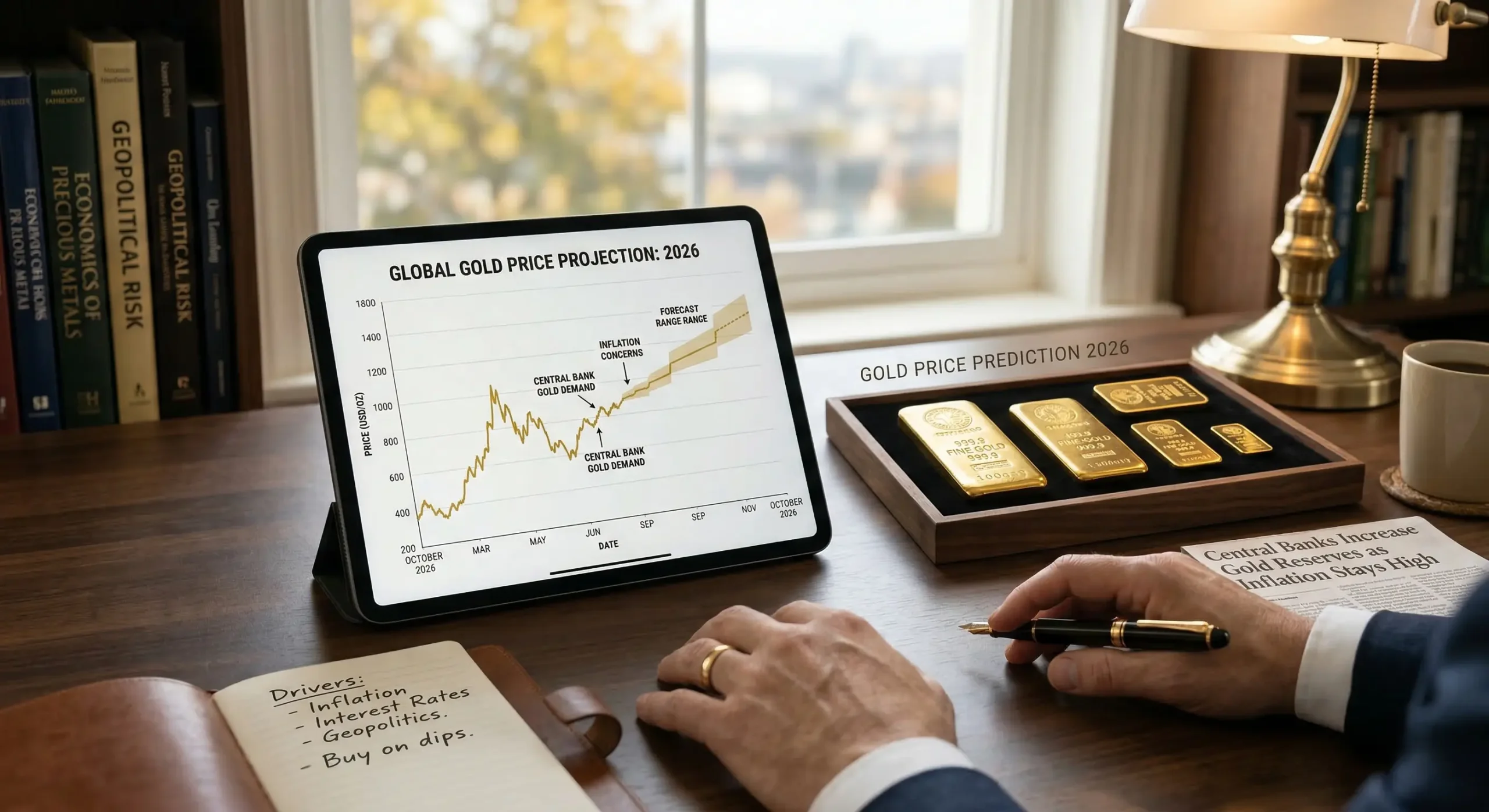
Gold price prediction 2026 is one of the most searched topics among investors as global markets continue to face uncertainty. Gold has historically been a safe-haven asset, but predicting its future price requires understanding key economic and geopolitical factors.
This guide explores the most important drivers behind gold prices and what investors can expect in 2026.
1. What Drives Gold Prices?
Several key factors influence gold price prediction 2026 and determine whether prices rise or fall.
- Inflation rates
- Interest rates
- Global economic stability
- Geopolitical tensions
These variables directly impact investor demand for gold.
2. Inflation and Gold in 2026
Inflation remains one of the strongest drivers behind gold prices. When inflation rises, the purchasing power of fiat currencies decreases, making gold more attractive.
In 2026, inflation is expected to remain a key factor, supporting long-term demand for gold.
3. Interest Rates and Market Impact
Interest rates play a critical role in gold price prediction 2026. Higher interest rates can reduce demand for gold because investors move toward yield-generating assets.
However, if rates stabilize or decrease, gold prices may rise again.
4. Geopolitical Risks
Global conflicts, political instability, and economic uncertainty all increase demand for gold.
In uncertain environments, investors turn to gold as a safe store of value.
5. Expert Forecasts for 2026
Many analysts expect gold to remain strong in 2026 due to continued uncertainty in global markets.
- Moderate growth scenario
- Strong demand from central banks
- Ongoing economic instability
These factors suggest a positive outlook for gold prices.
6. Can Gold Prices Drop?
While gold is considered stable, short-term declines are always possible.
- Strong economic recovery
- High interest rates
- Reduced market uncertainty
These conditions can temporarily push gold prices lower.
7. Investment Strategy Based on Predictions
Understanding gold price prediction 2026 helps investors make smarter decisions.
- Buy during dips
- Hold for long-term gains
- Diversify your portfolio
You can explore our
gold bars collection
to start investing.
8. Final Thoughts
Gold price prediction 2026 suggests that gold will continue to play a major role in investment portfolios. While short-term fluctuations are expected, long-term demand remains strong.
Investors who understand market trends are better positioned to take advantage of opportunities.
9. Long-Term Outlook for Gold Prices
Looking beyond short-term fluctuations, gold price prediction 2026 remains closely tied to global economic conditions. Central banks continue to accumulate gold reserves as a hedge against currency risk, which supports long-term demand.
Additionally, ongoing geopolitical tensions and economic uncertainty are expected to keep gold relevant as a safe-haven asset. Investors seeking stability often turn to gold during volatile periods, reinforcing its value over time.
While predicting exact price levels is difficult, most indicators suggest that gold will remain a strong asset in diversified portfolios. A balanced strategy that includes gold can help reduce risk and protect long-term wealth.
For real-time updates, you can track
live gold prices here
before making investment decisions.
10. Key Factors That Could Impact Gold Price Prediction 2026
When analyzing gold price prediction 2026, investors should consider multiple external factors that can significantly influence market movements. One of the most important elements is central bank policy. Many central banks continue to increase their gold reserves as a way to hedge against currency instability, which supports long-term demand for gold.
Another critical factor is the strength of the US dollar. Since gold is priced in dollars, a weaker dollar often leads to higher gold prices, while a stronger dollar can put pressure on gold markets. This inverse relationship plays a major role in gold price prediction 2026 and should not be overlooked by investors.
Supply and demand dynamics also impact gold prices. Mining production, recycling, and global demand from industries and investors all contribute to price fluctuations. In recent years, demand from emerging markets has grown, further strengthening gold’s position as a global asset.
Finally, investor sentiment and market psychology can drive short-term price movements. During periods of fear or uncertainty, gold demand tends to rise rapidly. Understanding these factors helps investors build a more accurate view of gold price prediction 2026 and make informed investment decisions.